Wind damage
Wind damage to a roof: the signs, and the one nobody sees
Wind damage looks obvious — missing shingles, debris in the yard. The part that costs homeowners money is the part that is invisible: seals broken by wind on shingles that dropped back into place looking perfectly normal.
Written and reviewed by Finley L., Texas Roofing Now
·
How wind actually damages a roof
Wind does not simply push on a roof. As air accelerates over the ridge it creates lift on the surface below — the same effect that lifts a wing. That lift gets under the leading edge of a shingle and peels upward.
This is why wind damage is not evenly distributed. It concentrates where lift is greatest and where edges are exposed:
- Ridges and hips, where the airflow accelerates
- Rakes and eaves, the exposed edges of the roof
- Corners, where turbulence is highest
- The elevations facing the wind, and often the leeward slope just past the ridge
- Anywhere the seal was already weak — an old roof, a previous repair, or a slope that never sealed properly because it was installed in cold weather
Because it is directional and geometric rather than random, wind damage looks quite different from hail damage on the same roof — see the comparison table on the storm damage hub.
Signs of wind damage
- Missing shingles or missing tabs, exposing the underlayment or the deck.
- A horizontal crease across a shingle face — the mark left where a shingle was lifted and folded back on itself.
- Tabs that no longer lie flat, or a wavy line along a course where the seal has gone.
- Displaced or missing ridge caps.
- Lifted or damaged flashing, especially at walls and chimneys.
- Shingle pieces or whole tabs in the yard, or in a neighbor's yard downwind.
- Damaged fencing, downed limbs and debris impact, which corroborate the wind event itself.
- Exposed nail heads where a shingle above has moved.
What wind damage looks like
As on our hail page, this is an illustration rather than a photograph. This site is a referral service with no roofing work of its own to photograph, and we are not going to present licensed stock imagery as our own work. What matters here is what the defect means anyway.
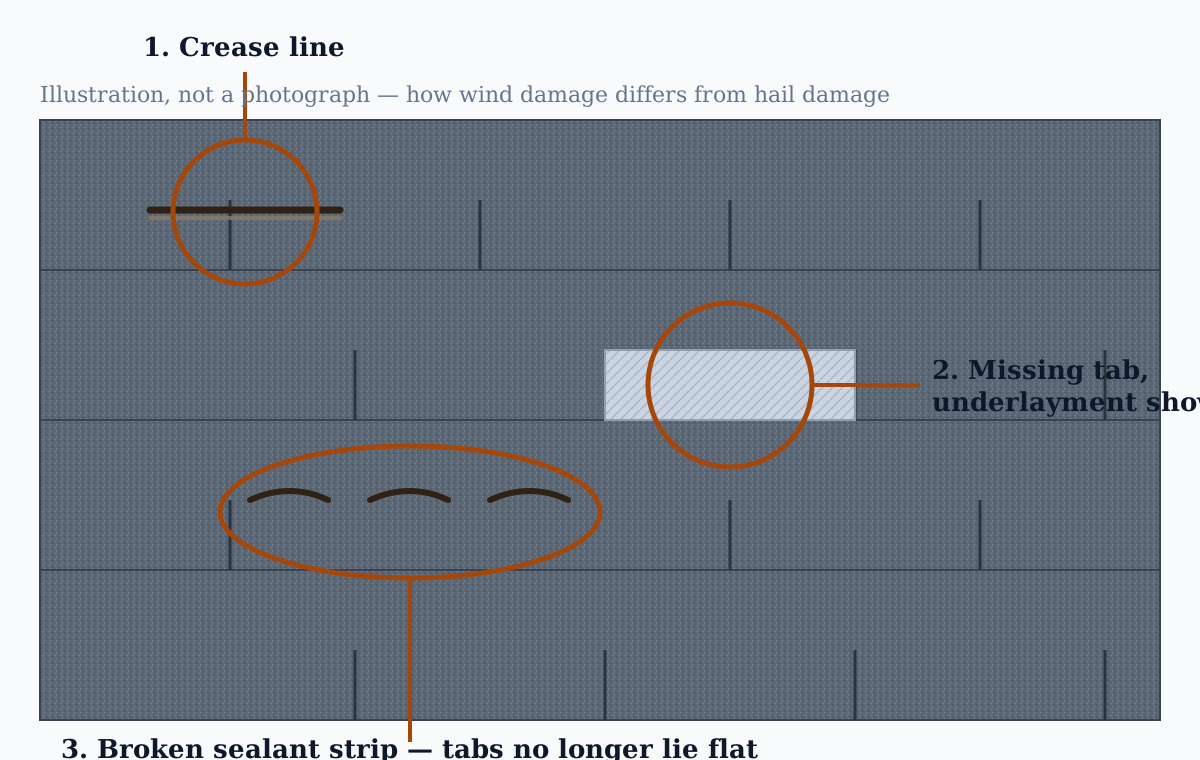
1. The crease
A shingle that was lifted and folded back carries a crease across its face. The mat fractures along that fold, and the fracture does not heal. The shingle may drop back down and look almost untouched from a distance — which is exactly why creasing is a recognized wind-damage indicator that inspectors look for specifically.
2. The missing tab
The obvious one. A tab is gone and the underlayment, or the deck, is exposed. Beyond the immediate water risk, a missing tab tells you the wind was strong enough to defeat the seal in that area, which raises the question of what happened to the tabs on either side of it.
3. The broken sealant strip
The important one, covered in its own section below, because it is the damage that decides claims and the damage that inspections most often miss.
The broken seal: the damage nobody sees
Asphalt shingles are not held down by nails alone. Each course bonds to the one below via an adhesive strip that softens in the sun and seals the tab down. That bond is most of what keeps a roof together in wind.
When wind breaks that bond, three things can happen. The tab tears off, which you can see. The tab folds back and creases, which you can see if you look. Or the tab lifts, breaks its seal, and drops back into place looking perfectly normal.
The third case is the problem, because:
- It is invisible from the ground.
- It is invisible in a drone photograph.
- It will not necessarily leak this year.
- The shingle is now unsealed, so the next moderate wind lifts it again, more easily.
- By the time it does fail visibly, the storm that caused it is long past and the damage reads as age.
Checking for it means being on the roof and lifting tabs by hand across each slope. It is the single strongest argument for a hands-on inspection over an aerial one — see what drone inspections miss.
Why wind claims differ from hail claims
Both are covered perils on a typical policy, but they behave differently in practice.
Wind damage is more often visible, which makes the existence of damage easier to establish and the extent harder. Three missing tabs on one slope is plainly damage; whether the wind also broke seals across two other slopes is the part that has to be demonstrated.
Wind damage is directional, so a scope covering only the affected elevations is a common outcome. Where seals were broken beyond those elevations, that has to be documented rather than asserted.
The deductible often decides it. TDI notes that your wind and hail deductible may differ from the deductible applying to the rest of your policy, and it is frequently a percentage of dwelling coverage. A few missing tabs can easily cost less than the deductible, which makes filing pointless — unless the true scope is larger than what is visible.
Matching gets raised more often. When only some slopes are being replaced, whether the replacement shingles will match the remainder is a real issue, and one to put in writing early rather than discover at delivery.
What gets mistaken for wind damage
- Installation error. Shingles nailed too high, over-driven or under-driven nails, or too few fasteners produce failures that look like wind damage but are a workmanship issue — and are handled very differently by an insurer.
- Shingles that never sealed. Roofs installed in cold weather sometimes never bond properly. The tabs lift in ordinary wind because they were never sealed, not because a storm broke them.
- Age-related curling. Edges lifting from ultraviolet aging, uniformly across the sun-exposed slopes, rather than directionally.
- Ventilation-driven deterioration. A poorly ventilated roof cooks from underneath, which degrades the sealant and leaves shingles vulnerable to wind that should not have moved them.
- Debris impact. Real damage, often covered, but it is impact damage rather than wind uplift and it is documented differently.
What to do next
- Photograph everything from the ground, including any shingle pieces in the yard, before you tidy up.
- Note the date of the storm and the direction the wind came from.
- Take temporary steps to prevent further damage if a slope is exposed, and keep the receipts. Do not make permanent repairs before your insurer inspects — TDI is explicit.
- Get the roof inspected properly, including a hands-on seal check on every slope.
- Check your wind and hail deductible specifically, not the general policy deductible.
- If you file, read the claim process first, and be present when the adjuster comes out.
Frequently asked questions
What are the signs of wind damage to a roof?
Missing shingles or tabs, a horizontal crease across a shingle face where it was lifted and folded back, tabs that no longer lie flat, displaced or missing ridge caps, damaged or lifted flashing, exposed underlayment, and debris or shingle pieces in the yard. Wind damage is directional and concentrates along edges, ridges, rakes and corners.
How much wind does it take to damage a roof?
There is no single number, and we are not going to invent one. It depends on the shingle's wind rating, its age and the condition of its sealant, how the roof was installed, the exposure of the property, and gust behavior rather than sustained speed. An aged roof with weak seals can lose tabs in wind a new roof would shrug off.
Is a creased shingle actually damaged?
Yes. A crease means the shingle was lifted and folded back on itself, which fractures the mat along the fold. The shingle may lie back down and look almost normal, but the fracture line is a permanent weakness and a future failure point. Creasing is a recognized wind-damage indicator.
Can the wind break the seal without the shingle moving?
Yes, and it is the most commonly missed wind damage there is. Asphalt shingles seal to the course below with an adhesive strip. Once wind breaks that bond the tab may drop back into place looking untouched, but it is no longer sealed and it will lift in the next storm. This is a hands-on check, not a visual one.
Does insurance cover wind damage to a roof in Texas?
Damage from a windstorm is generally covered subject to your policy and deductible. Note that TDI points out your wind and hail deductible may differ from the deductible that applies to the rest of your policy, and it is often a percentage of dwelling coverage rather than a flat amount.
A few shingles blew off. Is that worth claiming?
Possibly not, and that is worth working out before you file rather than after. A handful of tabs on one slope may well cost less to repair than your wind and hail deductible. The question is whether the wind also broke seals elsewhere, because that is a much larger scope and it is invisible from the ground.
Sources
- Texas Department of Insurance — After hail or windstorms — Documentation guidance, temporary repairs, adjuster visits, contractor vetting
- Texas Department of Insurance — Replacing your roof — Wind and hail deductibles, roof age and condition
- NOAA / National Weather Service Fort Worth — Dallas/Fort Worth Climate Narrative — Regional severe weather seasonality for the Dallas/Fort Worth metroplex
Related reading
- How to identify hail damage
The other half of what a North Texas storm does to a roof.
- Storm damage: what counts and what to do
The overview, including the first-few-days sequence.
- The Texas roof insurance claim process
Deductibles, depreciation and what happens after you file.
- Request a free roof inspection
Including the hands-on seal check that a drone cannot do.