Roof replacement
Roof replacement in North Texas: process, materials and permits
A roof replacement is two projects running in parallel — the roofing, which is well understood and takes a couple of days, and the paperwork, which is where things actually go wrong. This covers both.
Written and reviewed by Finley L., Texas Roofing Now
·
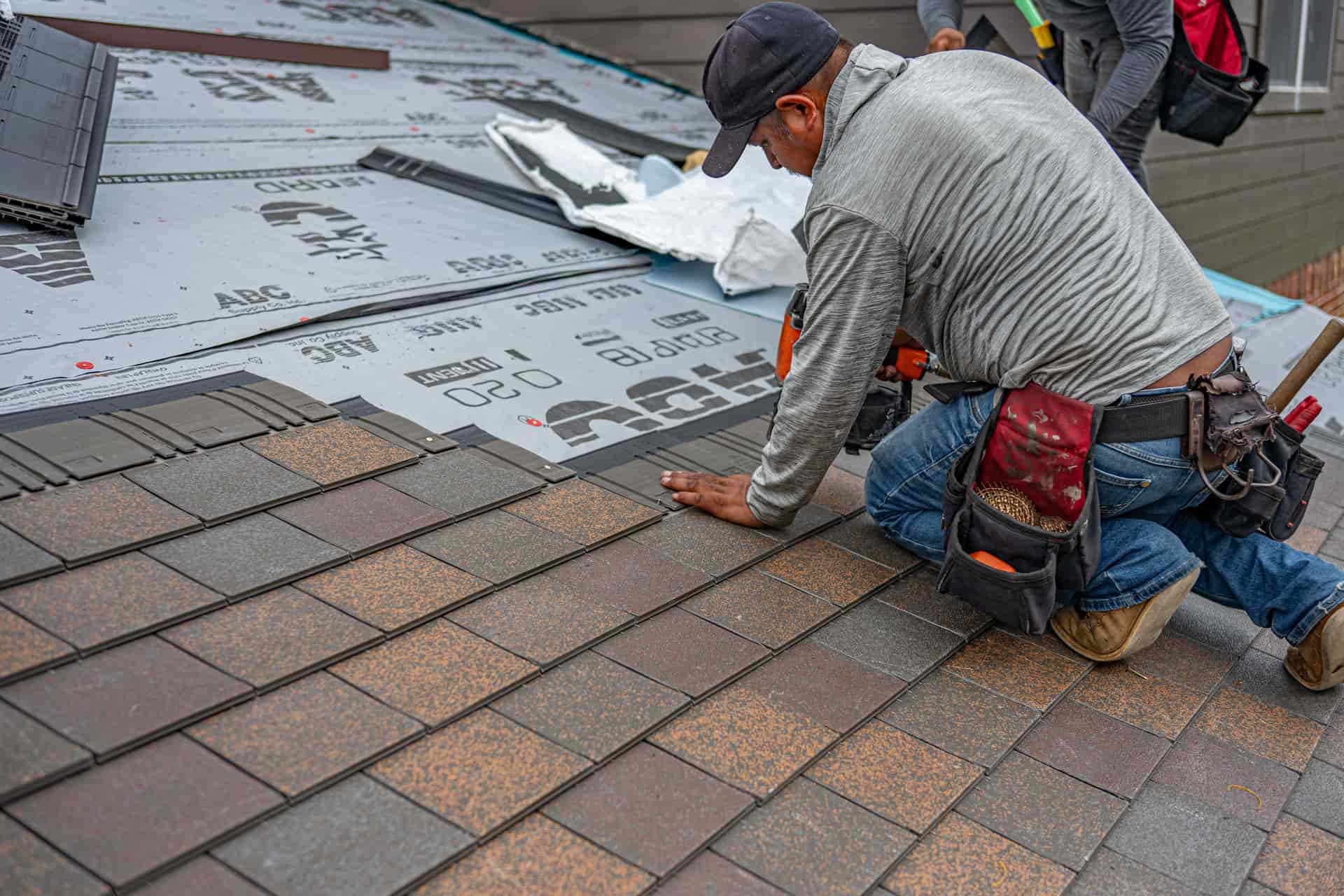
Roofing work itself is not mysterious. Tear off the old covering, inspect and repair the deck, lay underlayment and flashing correctly, fasten the new covering to the manufacturer's pattern, ventilate it properly, and clean up. Done competently, a typical single-family asphalt roof in North Texas is a one- or two-day job.
What makes roof replacement complicated here is that most of them happen alongside an insurance claim, and the claim is decided on documentation produced before, during and after the work. This page covers the roofing and where the paperwork intersects it.
When a roof needs replacing rather than repairing
Repair is the right answer more often than roofing sales suggests. Replacement genuinely becomes the answer when:
- Damage is distributed across multiple slopes. Isolated damage on one elevation is a repair. Impact across the field of several elevations is not sensibly patched.
- The shingles have lost their integrity. Widespread granule loss exposing the mat, brittleness, or mats that fracture when handled mean any repair is being fastened to material that is already failing.
- The decking is compromised. Soft, delaminated or rotted sheathing underneath means the problem is structural, not cosmetic.
- The roof is at the end of its service life. Worth noting the coverage consequence: TDI states that your insurance company will not pay for a new roof just because it is old or worn out. An end-of-life replacement is generally a homeowner expense, not a claim.
- You cannot match the existing shingle. Discontinued colors and profiles can make a visually acceptable repair impossible, which is a legitimate factor in a scope discussion.
The full decision, including how an insurance claim changes it, is on roof repair vs replacement.
What a roof replacement involves, start to finish
- Documented inspection. Every slope photographed and dated, before anything is touched. On a claim this is the evidence; on a private job it is the scope.
- Scope and estimate. An itemized list — squares, underlayment, drip edge, flashing, valley treatment, penetrations, ventilation, ridge, disposal, permit. Itemized matters: a single lump-sum figure cannot be compared against an insurer's scope of loss line by line.
- Permit. Pulled by the contractor, from your city, before work starts. Requirements differ by city — see below.
- Protection and setup. Landscaping, windows, driveways and air-conditioning units covered; debris containment positioned.
- Tear-off. Existing covering removed down to the deck, so the deck can actually be seen. This is the moment decking problems surface, and the moment to photograph them.
- Deck inspection and repair. Damaged or rotted sheathing replaced. In Denton, replacing any portion of the roof decking requires a Residential Alteration Permit in addition to the roof permit.
- Underlayment, drip edge and flashing. The waterproofing layer. Most leaks in a failed roof trace back to this stage or to the penetrations, not to the shingles.
- Covering installed. To the manufacturer's nailing pattern and specification — the detail that warranties actually turn on.
- Ventilation and ridge. Intake and exhaust balanced. Under-ventilated roofs age from underneath, and that aging is what gets called wear and tear later.
- Cleanup, magnet sweep and final inspection. Plus the city inspection where required.
- Documentation package. Photographs of the tear-off, the deck, and the completed work. On a claim this is what supports the release of withheld depreciation and any supplement.
Materials: what North Texas roofs are usually built from
Asphalt shingles dominate residential roofing across the metroplex, and within that category the practical choice is between three-tab and laminated (architectural) shingles. Laminated shingles are thicker, heavier, and generally carry higher wind ratings and longer manufacturer warranties.
Metal, tile and flat or low-slope systems all appear on North Texas homes, usually on specific elements — a porch, a bay, a modern build — rather than across the whole roof. Each has different inspection and claim characteriztics: hail damage to a metal roof, for example, is often cosmetic denting that insurers treat differently to a fractured asphalt mat.
One material rule matters more than the rest for a claim: changing material is not a like-for-like replacement. Frisco offers a fast self-service permit path specifically for replacing roofs with the same material, and Denton requires a plan review before permit approval if you are changing roofing materials. If a claim is paying for a like-for-like replacement and you want to upgrade, the difference is normally a homeowner cost, and the permit path changes too.
Impact-resistant shingles
Impact-resistant shingles are rated for impact resistance under a standardized test, with Class 4 being the highest common rating. In a hail-exposed market that is a real engineering difference, not a marketing one.
Two things worth knowing before you decide. First, impact-resistant does not mean hail-proof — these products resist damage better, they do not eliminate it. Second, many Texas insurers offer a premium discount for a Class 4 roof, but the availability and size of that discount is set by the carrier, so ask your own insurer rather than taking a contractor's word for what your discount will be. We are not going to quote a percentage, because we have no sourced figure that applies across carriers.
Permits vary by city, and it matters
This is the part of a roof replacement that homeowners are least aware of and that most reliably distinguishes a legitimate contractor from a transient one. Requirements across the North Dallas corridor genuinely differ:
- Denton requires a roof permit for all residential roof or re-roof projects, effective June 1, 2022. New coverings must be installed per the 2021 International Residential Code as applicable, damaged, rusted or deteriorated roof vents and flashing must be replaced, a plan review is required before permit approval if you change materials, and a Residential Alteration Permit is required if any decking is replaced.
- McKinney lists roofing among the residential work requiring a permit, applied for through the city's Citizen Self Service portal.
- Frisco offers Self Service permits for replacing roofs with the same material — a fast path for a like-for-like replacement.
- Dallas administers permits under Chapter 52 of the Dallas Building Code, and adds historic, conservation and planned development district requirements that can restrict visible materials at specific addresses.
- Plano administers residential permits through Building Inspections; confirm the current re-roof requirement with the city before work starts.
Pulling the permit is the contractor's job. A contractor who asks you to pull it, or who tells you no permit is needed without checking, is telling you something.
City-by-city detail is on each service area page: Dallas, Plano, Frisco, McKinney, Denton.
How insurance interacts with a replacement
If a covered event caused the damage, the replacement is usually funded through a claim, and the mechanics of that determine how the project is sequenced.
On a replacement cost policy, TDI describes payment as typically arriving in two checks: the first covering the actual cash value of the damage, and the second — the withheld depreciation — after repairs begin. That is why work generally starts before the full amount has arrived, and why abandoning the project after the first check means the second one never comes.
You will owe your deductible, and TDI states that contractors cannot legally waive it under Texas law. Note also that your wind and hail deductible may differ from the rest of your policy's deductible — often a percentage of dwelling coverage rather than a flat sum.
The full sequence is on the Texas roof insurance claim process.
Choosing who does the work
Texas does not license roofing contractors at the state level, so “licensed roofer” means very little here on its own. What you can verify:
- General liability insurance and workers' compensation — ask for certificates.
- A durable Texas business presence, not a truck that arrived after the storm.
- Voluntary certification such as RCAT, or a manufacturer certification.
- References and Better Business Bureau standing — both specifically recommended by TDI.
- At least two bids, itemized so they can actually be compared — also TDI's guidance.
- A contract with no blank spaces, and no request for full payment up front.
The complete checklist, including why the Texas licensing gap exists and what fills it, is on how to vet a roofer in Texas.
Frequently asked questions
How long does a roof replacement take?
Most single-family asphalt shingle roofs are torn off and re-covered inside one to two working days, weather permitting. Complex roofs with many planes, steep pitch, or significant decking replacement take longer. The paperwork around an insurance claim usually takes considerably longer than the roofing.
Do I need to move out during a roof replacement?
No. It is loud, there will be debris and equipment around the house, and you will want cars out of the driveway, but the house stays habitable. If your home has become uninhabitable because of the damage itself, TDI notes that living-expense reimbursement may apply under your policy.
Can new shingles be installed over the old ones?
Some jurisdictions allow a limited layover and some do not, and the rules are set locally. McKinney's published guidance for roofing work, for example, is a tear-off approach rather than a layover. Beyond code, a layover hides the condition of the decking, which is exactly the thing you want documented on a claim. Our roofing partner tears off.
Does a new roof need a permit in North Texas?
It depends on the city, and the differences are real. Denton requires a roof permit for all residential roof or re-roof projects effective June 1, 2022. McKinney lists roofing among the work requiring a permit. Frisco offers a self-service permit for replacing roofs with the same material. Always confirm with your own city before work starts, and let the contractor pull it.
Will insurance pay for a full replacement or just the damaged slopes?
That is your insurer's decision under your policy, and it varies. What decides it in practice is the scope of loss, which is built from what was documented. Damage recorded on every affected slope, with dates and photographs, is what makes a full-roof scope defensible.
What happens if the decking underneath is rotten?
It gets replaced, and on a claim it usually becomes a supplement, because nobody can scope decking condition before the covering comes off. Denton also requires a Residential Alteration Permit if any portion of the roof decking is being replaced. Photograph it during the tear-off — that is what makes the supplement straightforward.
Sources
- Texas Department of Insurance — Replacing your roof — Coverage types, roof age, deductibles and the two-check payment process
- City of Denton — Roofing — Roof permit required for all residential roof or re-roof projects effective June 1, 2022; 2021 IRC; flashing and vent replacement; plan review on material change
- City of McKinney — Home Repairs & Permit Information — Roofing listed among residential work requiring a permit; applications via Citizen Self Service
- City of Frisco — Apply for Residential Permits — Self Service permits for replacing roofs with the same material
Related reading
- What actually drives roof replacement cost
The variables that move the number, and why we do not publish a price range.
- Roof repair or roof replacement?
How to decide, and how a claim changes the maths.
- The Texas roof insurance claim process
How a covered replacement actually gets paid for.
- Request a free roof inspection
You cannot decide anything sensibly without knowing what is up there.